








Επιμέλεια: Eva Lianou Petropoulou
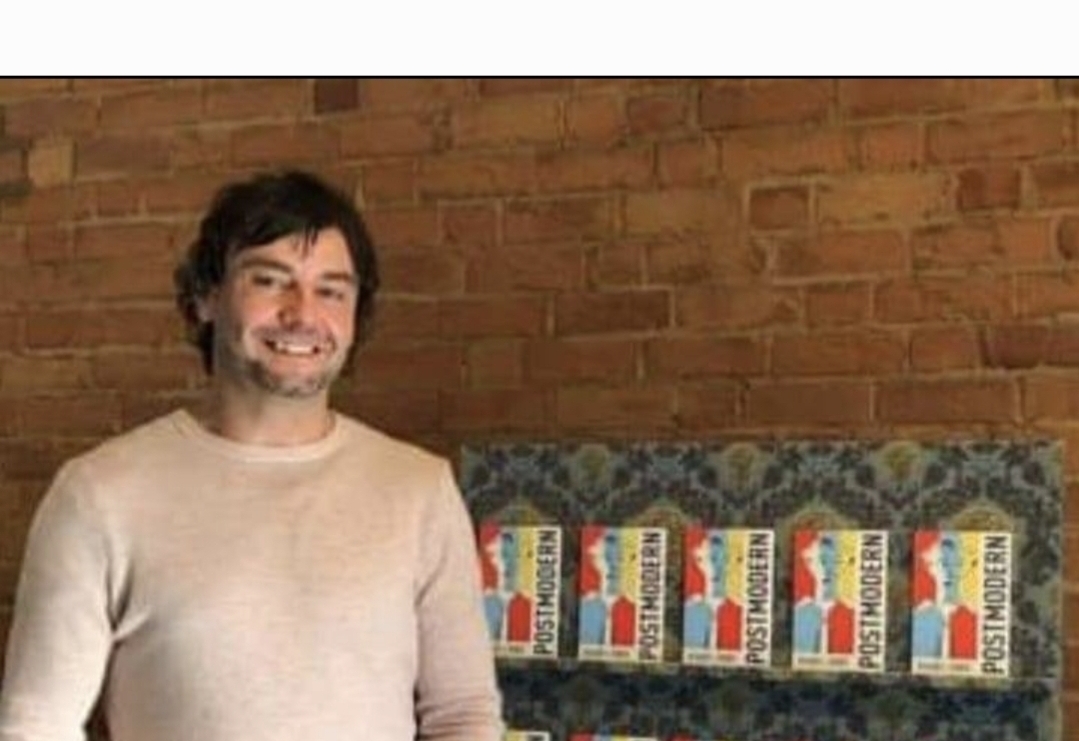
Dear Richard, I am very happy to have this interview with you. Let’s talk about you. How was your childhood? Your dream? I was fortunate to have a good upbringing, with supportive parents and a stable home, growing up in a working-class town – Mansfield – in Nottinghamshire. It was a grounded childhood – simple in many ways, but rich in the things that mattered: love, encouragement, books, and space to think.
Books were always part of my life. I have been reading from a very young age, and I still remember getting books every Christmas. My Mum once told me a story that stayed with me: she had gone to order some books I’d asked for, including the works of William Blake, and the shop assistant remarked on what good taste I had for someone so young. That says a lot about where my mind was even then.
Writing was there from the beginning too. I wrote constantly as a child, and one of my English teachers recognised something in it early on, telling me that one day I would write a book. He was right – I’ve now had five published. But at the time, writing never felt unusual to me. I didn’t “dream” of being a writer because I simply assumed it was something everyone did – writing in journals and note pads, etc. It felt natural, like breathing.
Poetry always fascinated me. I would often find myself drawn to the poetry sections of libraries, trying to understand what it was. There was a wonder to it – something elusive, almost sacred. Alongside poetry came philosophy and psychology: questions of existence, meaning, and the workings of the mind. Looking back now, I can see that all of these threads became woven into my work.
I never consciously set out to become a writer. Life seemed to shape that path for me. But I do remember when I first went to university thinking how powerful it must be to write words that could genuinely affect, and inspire, another person’s life!
Now, through my books, essays, and my freelance writing – including my own column in local lifestyle magazines – I find myself in that very position. Looking back, it all makes sense. What once felt ordinary has become my life’s work, and I feel deeply grateful for that.
When did you meet poetry? Who inspired you?
Poetry found me early, though I only truly recognised it later. It became a language for the things ordinary speech could not hold. I have been inspired by many voices across time – from William Blake to Jim Morrison. But life itself has been my greatest teacher.
What is poetry giving to the world?
Poetry gives the world pause. In an age of speed, distraction, and noise, poetry asks us to stop and feel. It reminds us of what is essential – love, grief, beauty, impermanence, truth. It keeps alive the inner life of humanity.
What about young people? Are they interested in literature and books?
I believe many young people are hungry for meaning, but they are growing up in a world that often fragments their attention. Literature asks for patience, and patience is becoming rare. But the hunger remains. The challenge is not that literature has lost its value, but that the world has changed its rhythm.
Tell us about your book. Why would you suggest your book to the reader?
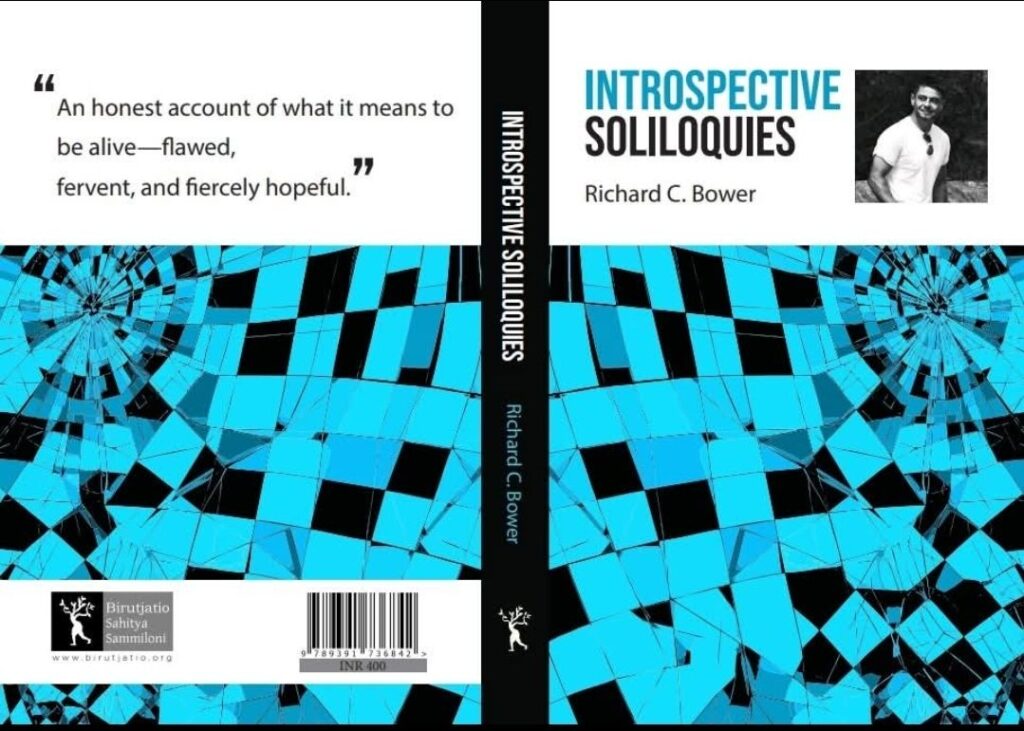
My latest book, Introspective Soliloquies, is perhaps the clearest expression of who I am as a writer at this stage of my journey. It is a collection rooted in reflection, contradiction, rebellion, and inner searching – exploring themes of nature, identity, suffering, resilience, and the eternal tension between shadow and light. The title itself speaks to the essence of the work: a dialogue with the self, an honest confrontation with the inner landscape.
What makes this book especially meaningful to me is the journey it has taken beyond the page. It became my first work to enter the UK curriculum, now being studied in schools across the Midlands – something that felt both surreal and deeply humbling. That achievement also made headlines in India, because the book was published by the esteemed Indian publishing house Birutjatio, a publisher long associated with literary prestige and academic significance. Their catalogue has included giants such as Rabindranath Tagore, Nobel laureates, Bollinger Prize winners, and Pulitzer finalists. To become their first contemporary British author is an honour I hold close.
In many ways, Introspective Soliloquies represents a bridge – between the romantic inwardness of Lord Byron and the spiritual universality of Tagore. Some have described my work as occupying that middle ground, and I think there is truth in that. It carries both rebellion and reverence; both grit and grace.
The book also forms part of my wider literary journey – one that has seen my work recognised by UNESCO and Nottingham City of Literature, where I have been placed in conversation with the legacy of Nottinghamshire writers such as Lord Byron, D.H. Lawrence, and Alan Sillitoe. That lineage means a great deal to me, not because of status, but because all of them, in their own way, wrote against the grain.
I would recommend Introspective Soliloquies to readers who value honesty over polish, depth over distraction, and poetry that does not merely decorate life, but interrogates it.
Available here:
https://www.amazon.co.uk/dp/B0G39Z2CJ7
What is your favourite quote?
At the moment, my favourite quote is:
“The energy of the mind is the essence of life.” Aristotle.
It’s a quote that resonates deeply with me and one that will appear at the front of the book I am currently working on. I won’t say too much about that yet, because I don’t want to give too much away, but I think the quote itself offers an insight into the spirit of the work.
It also reflects something central to me as a writer – my long-standing fascination with philosophy, consciousness, and the workings of the mind, which I mentioned earlier. Those themes have always run alongside my poetry.
I’ve always chosen quotes carefully for each of my books. They act almost like doorways into the work – particular fragments of thought that help frame the journey ahead. Over the years, those guiding voices have included figures such as Jack Kerouac, Hunter S. Thompson, and Carl Jung – writers and thinkers whose words have stayed with me, each for different reasons, at different times in my life.
What are your future plans?
At the moment, my future plans are rooted very much in the place I come from. As Poet Laureate of Mansfield, I am working closely and passionately with my hometown to inspire and encourage local writers, helping to nurture creative voices that may otherwise go unheard.
Over the past months, I have been giving workshops, talks, and recitals of my own work at colleges and various venues around the town, sharing not just poetry itself, but the deeper idea that writing can be a means of understanding ourselves and our communities.
A major part of that work has been my role as judge for Mansfield’s Writing on the Wall poetry competition – a heritage project tied to the restoration of the historic Old Town Hall. The competition invited writers to respond to themes such as hope, courage, reflection, and community, and the winning pieces will not only be published in an anthology – for many, perhaps the first time they will ever see their words in print – but fragments of those poems will also be woven permanently into the fabric of the town itself, inscribed onto the historic stonework of Mansfield’s Old Town Hall. I think there is something incredibly powerful about that: words becoming part of the landscape, part of the town’s memory.
Beyond that, my ambition is to build on the talent we are uncovering and create something lasting – an annual literature festival in Mansfield that is recognised not just locally, but nationally. Mansfield has a rich creative spirit, and I want to help give it the platform it deserves.
For me, the future is not only about my own writing. It is about creating opportunities for others, strengthening the literary identity of my hometown, and ensuring that the next generation of writers knows that their voice matters.
A wish?
My wish is that people return to themselves – to silence, to reflection, to authenticity. In a world that constantly asks us to perform, I hope more of us remember how to simply be.
Thank you.
Richard C. Bower
Author | Poet Laureate of Mansfield
UNESCO-Recognised Literary Contributor
Cultural Ambassador, Mansfield UK