










Επιμέλεια: Εύα Πετροπούλου Λιανού
In the present scenario, we are witnessing a perceptible economy of time, coupled with extreme precision, in the performing of various functions relating to human mind. The human mind has its own speed, but machines have enhanced human capability, so that what once took hours can now be accomplished in seconds. The AI revolution has taken the world by storm, rather it seems we are losing our feet, and already flying in the tempting world of the AI.
If we can perceive it, let us focus on the impact of the new civilization, its TV ads, and the films available round the clock on OTT platforms. Children take far less time to grow young, and then, old too when we used to have our adult years. Very small kids know everything about rapes, baddies, killings and daggers, and even murders. In a way, time has galloped upon them, and infused in them wisdom in a few years, which otherwise, would have come, or may not have come at all, in decades. It is not only knowledge, it is also the time taken that is under study today. To put it simply, I am pointing out how much time our new generations take to mature.
From this premise, let me now introduce the idea of educational paradigms. Centuries ago, when time moved on the back of camels, our colonial educationists decided that men need at least ten years to complete basic education. And education should be imparted in annual slabs of ten years. The whole month, and then, multiplied by 12, students would keep going to school and coming back, sun or shower, and studying hard at home. The hard work helped to get them high divisions, on the basis of which they could enter some clerical job. This used to be the highest dream of the parents.
Decades after Independence, and on the threshold of a digital revolution, Matriculation still means ten years, and B.A. six years [plus 2 plus 4]. What do we want to show? As the times are changing, and time itself is losing its longevity, are our students gaining in lethargy? Do we think they are becoming dullards so that they still need sixteen years to do B.A. and then, one more year to do M.A. and thereafter, three years [extendable up to five] for doing Ph.D?
The time span is horrifying. Do we want that our young men should spend their creative period in waiting for periods, labs, and library hours? Are we living in fifties, to expect young people to waste their precious time, ten years for Matriculation, and six years for B.A. It is simply atrocious in these times of AI and faster processing of data.
How fast are our kids, look at the games they play on their mobile phones. How smart is this race! We are fools if we think they should be forced to spend one year in one class, and ten years to do Matriculation and then B.A. and M.A. and so on.
A more practical way is to free the education system from the stranglehold of annual examination system, and make things free for the kids. Those who want, or need slow doses, may receive instruction in the schools on yearly basis, but those who can master the syllabus in two or three months, must not be forced to stay for the whole year in the same class. It is a grave injustice with the truly brilliant students. They should be allowed to appear in the final examination, even after two or three months. And if they clear, let them move to the next class. Even during Vedic period, such restrictions of time were never imposed. When the Guru felt the disciple has learned enough, he would ask him for Gurudakshina. (Parting gift from the disciple).
We are doing great disservice to the future generations by holding them for longer periods in the same class, simply because our policy wants to delay their maturation for a degree, and subsequently, their race for jobs. It is dire injustice with human intelligence, which must stop. NEP 2020 which already talks about flexible entry and exit and credit banks is a good beginning in this direction, and needs to be taken to its logical conclusion.
Extending on the same argument, I feel the time fixed for Ph.D degree needs to be reconsidered. We should focus on the essential ideas which a scholar generates and wants to convey. Moreover, no research which does not serve an ethical necessity should be allowed to be taken up. We must ensure students do not squander their time and energy, and also their youth for years on a degree in these times when people are already short on time. China has already done away with the need for submitting a thesis under the new Degree Law implemented we.f. January 2025. Under this law, the only consideration for doctoral degree, as an alternative to thesis, is the innovation which a scholar can present, such as new equipment, software, devices, prototypes, technological processes, or project documentations which demonstrates viability in real life. Wei Lianfeng at Harbin Institute of Technology became first to get Ph.D degree on the basis of practical results – a vacuum laser welding equipment.
AI and digitalization have offered us the facilities, and cut down on the time taken to amass material. Libraries too should be digitalized. We need to revolutionize the idea of a University. We should value human time and energy which is these days is wasted in making rounds of libraries and on formal education where hundreds of irregularities have crept in due to human factors.
It is better if we welcome the digitalisation, and involve AI in our studies, and stop wasting our time on amassing information, which is available at the click of a button. We should cut down on the time taken for the class work. Years should not matter. It is time which should matter, and students should be given a free hand to decide their own time, and the focus should shift from formality of education to creativity and innovation.
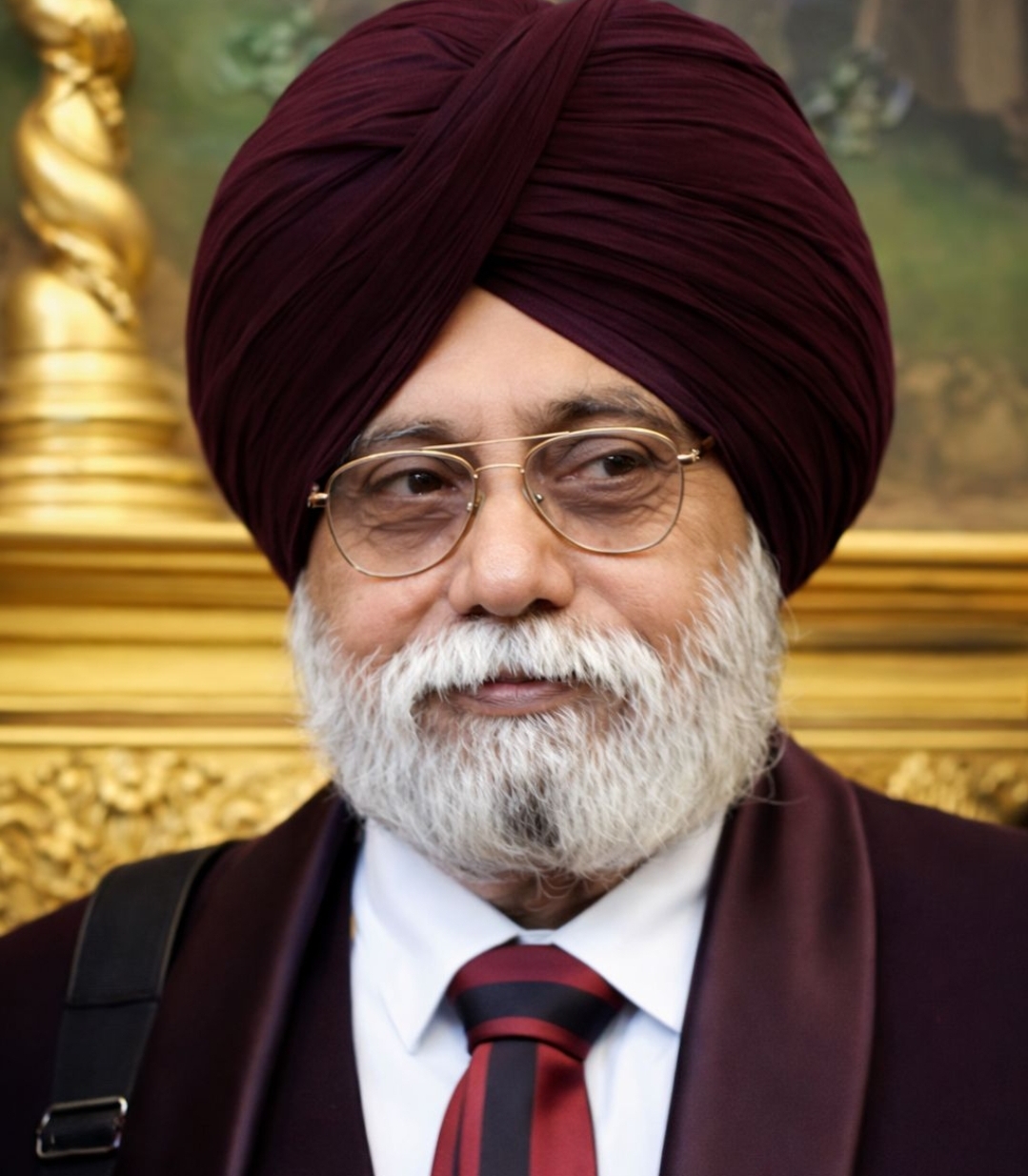
DR JERNAIL S ANAND
Dr. Jernail S. Anand, with 200 books to his credit [20 epics] is a Chandigarh-based polymath, and a vital architect of the 21st century ethical literature whose seminal work ‘Lustus: The Prince of Darkness’ challenges the moral complacency of our era. Founding President of the International Academy of Ethics, and Laureate of Charter of Morava [Serbia], Seneca [Italy], Franz Kafka [Germany, Ukraine, Czech Rep] and Maxim Gorky [Russia], his name is inscribed on the Poets’ Rock in Serbia. He is an Honorary Member of the Serbian Writers Association, Belgrade. Anand has built a poetics that unites ethics, Vedic spirituality, social critique, and the philosophy of meaning. Anand presents an articulated perspective on poetry as an instrument of planetary consciousness. A moral philosopher, professor, and international speaker, Anand has devoted much of his research to the ethical dimension of language, to the responsibility of the individual within a globalised society, and to the relationship between matter, consciousness, and transcendence. Email: [email protected].
Bibliography:
https://sites.google.com/view/bibliography-dr-jernal-singh/home
https://share.google/QtiWrcFr7Sca7v0qC