












Επιμέλεια: Εύα Πετροπούλου Λιανού
Aristotle, Longinus, Shelley, and Tagore, all believe that the pleasure principle is supreme in art and literature. Every true work of art begins with pleasure. It is not the shallow thrill of diversion, but the deep delight that occurs when form, rhythm, and meaning suddenly cohere. Horace said it 2,000 years ago: “Poets aim either to benefit, or to amuse, or to utter words both pleasing and helpful to life.”
Instruction without pleasure may qualify as pedagogy, but not as art. The didactic tract appeals to the intellect, but keeps the heart unaffected. Art smuggles its instruction inside beauty. As Percy Bysshe Shelley argued in A Defence of Poetry, poetry “awakens and enlarges the mind itself by rendering it the receptacle of a thousand unapprehended combinations of thought”. The mind consents to be changed only because it is first seduced by music, image, and metaphor.
The pleasure principle is supreme, and instruction is subdued. The greatest artists know that to preach directly is to fail aesthetically. The aesthetic must come first; the ethical follows in its wake.
Catharsis: Becoming Better After Reading, Watching, Feeling
Aristotle gave us the term in Poetics, observing that tragedy effects, through pity and fear, the catharsis of such emotions. We watch Oedipus fall, we weep for Antigone, and we leave the theatre not depressed, but strangely cleansed. The emotions have been exercised, recognized, and mastered.
Catharsis is not limited to Greek tragedy. It is the sigh after the last page of Les Misérables, the quiet after a Satyajit Ray film, the stillness when you exit a gallery where a single Amrita Sher-Gil canvas has held your gaze. Something in us has been purged and, paradoxically, replenished, making human beings better after reading a poem or watching drama or even after a film or a visual art gallery. Art gives us a safe space to encounter the extremes of life—betrayal, grief, ecstasy, sacrifice—without being destroyed by them. We rehearse humanity in fiction so we can perform it more generously in fact.
Connection with Creative Forces: A Space to Rejoice and Find Ourselves
Longinus, in On the Sublime, describes the effect of great writing as ekstasis—a being carried away. The sublime in art lifts us beyond the ordinary circuit of appetite and anxiety into what you call a connection with the creative forces. Rabindranath Tagore wrote that art is the response of man’s creative soul to the call of the Real. In that response, we get a space to think and rejoice and find yourself on the right side of things. That space is aesthetic distance. We step back from the transactional, and enter a zone where contemplation itself is the purpose.
This is why a child can be transfixed by a mural and a war-weary adult can be stilled by a raga. The artwork suspends time and gives us back to ourselves. As John Keats put it, “Beauty is truth, truth beauty”—not as a logical equation, but as an experienced unity. When we perceive that unity, we feel, however briefly, aligned with the right side of things.
Protagonist, Antagonist, and the Ethics of Projection
Every narrative, as you note, has a protagonist and an antagonist…projection is such that we side with the hero. This is not naïve. Northrop Frye argued that all literature is structured on mythic patterns of desire and fear—heroes, villains, quests, falls. The projection in art is moral training. In life, our sympathies are tangled with self-interest. In fiction, they are purified. We want Jean Valjean to escape, not because we would steal bread, but because art has let us feel the weight of hunger and the grace of mercy. We want Duryodhana defeated, not because we are flawless Pandavas, but because the epic has clarified the cost of arrogance.
This explains my observation: that we often wish good to happen to fictional characters … though in real life we may not be so good. Art externalizes our better self and lets us rehearse it. Matthew Arnold called poetry “a criticism of life”. Through the protagonist we criticize our own lives, and through the antagonist we recognize the shadows we otherwise excuse.
The Joy of Watching Evil Perish
There is a specific aesthetic joy in resolution—the moment when dissonance becomes consonance. Aristotle called it the pleasure proper to tragedy: not the pleasure of pain, but the pleasure of completion.
We do not gloat over Macbeth’s head or Ravana’s fall. We rejoice that a moral order, however battered, still exists. Kant distinguished between the agreeable and the beautiful; the beautiful gives disinterested satisfaction. Our joy at evil’s defeat in art is disinterested because the characters are not us, yet the victory feels ours.
This is the deepest aesthetic virtue: art lets us experience justice without vengeance, and pity without paralysis. It converts the chaotic matter of life into shaped form. That is the aesthetics … to give joy of watching evil perish. Not because we are bloodthirsty, but because we are meaning-hungry. We need to see that chaos is not the last word.
Why This Still Matters
In an age of information, art’s job is not to inform, nor to debate, but to give us the felt experience of order, compassion, and sublimity so that, when we return to the unshaped world, we carry a standard with us. Joseph Brodsky told students: “Aesthetics is the mother of ethics.” Not the other way around. We do not become good by memorizing rules; we become good by loving what is beautiful, and then wishing not to betray it.
So the pleasure principle is not decadence. It is discipline. Catharsis is not escape. It is rehearsal. Siding with the hero is not fantasy. It is practice for the day when the choice is ours, off the page and outside the frame. Art and literature uphold these virtues not by lecturing us into goodness, but by inviting us into beauty—where we find, often to our surprise, that we have already stepped onto the right side of things.
Works Cited
Aristotle. Poetics. Translated by S.H. Butcher, The Internet Classics Archive, c. 335 BCE.
Arnold, Matthew. Essays in Criticism: Second Series. Macmillan, 1888.
Brodsky, Joseph. On Grief and Reason: Essays. Farrar, Straus and Giroux, 1995.
Frye, Northrop. Anatomy of Criticism: Four Essays. Princeton UP, 1957.
Horace. Ars Poetica. Translated by A.S. Kline, Poetry in Translation, 2002.
Kant, Immanuel. Critique of Judgment. Translated by Werner S. Pluhar, Hackett, 1987.
Keats, John. “Ode on a Grecian Urn.” The Complete Poems, edited by John Barnard, Penguin Classics, 1988.
Longinus. On the Sublime. Translated by W.H. Fyfe, Harvard UP, 1995.
Ray, Satyajit. Our Films, Their Films. Orient Longman, 1976.
Shelley, Percy Bysshe. A Defence of Poetry. 1821. English Essays: Sidney to Macaulay, edited by Charles W. Eliot, P.F. Collier & Son, 1909.
Sher-Gil, Amrita. Amrita Sher-Gil: A Self-Portrait in Letters & Writings. Edited by Vivan Sundaram, Tulika Books, 2010.
Tagore, Rabindranath. Sādhanā: The Realisation of Life. Macmillan, 1913.
Tolstoy, Leo. What Is Art? Translated by Richard Pevear and Larissa Volokhonsky, Penguin Classics, 1995.
Vyasa. The Mahabharata. Translated by Kisari Mohan Ganguli, 1883–1896.
AUTHOR
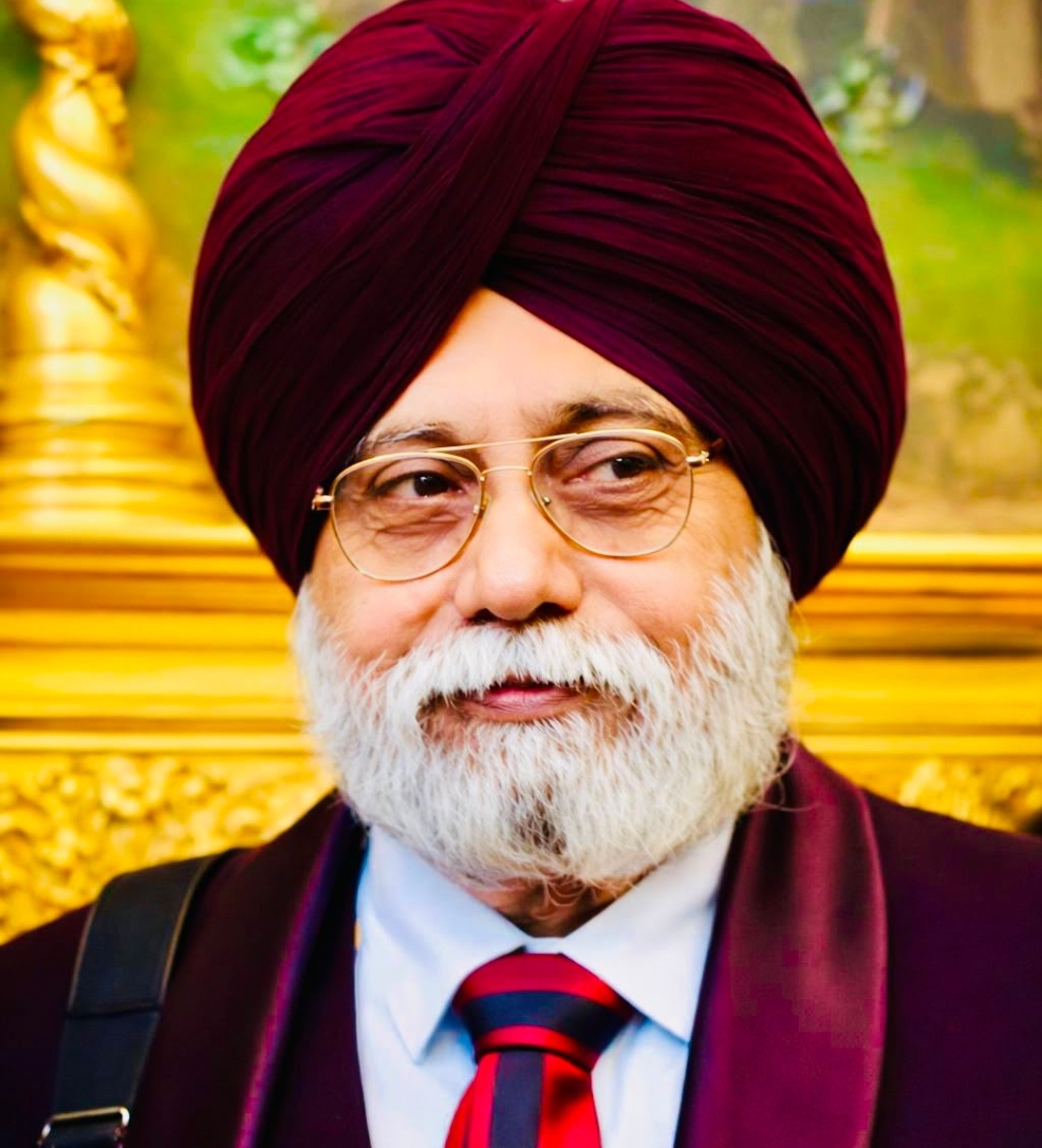
Dr. Jernail S. Anand, with 210 books to his credit [20 epics] is a Chandigarh-based polymath, and a vital architect of the 21st century ethical literature whose seminal work ‘Lustus: The Prince of Darkness’ challenges the moral complacency of our era. Founding President of the International Academy of Ethics, and Laureate of Charter of Morava [Serbia], Seneca [Italy], Franz Kafka [Germany, Ukraine, Czech Rep] and Maxim Gorky [Russia], his name is inscribed on the Poets’ Rock in Serbia. He is an Honorary Member of the Serbian Writers Association, Belgrade. Anand has built a poetics that unites ethics, Vedic spirituality, social critique, and the philosophy of meaning. Anand presents an articulated perspective on poetry as an instrument of planetary consciousness. A moral philosopher, professor, and international speaker, Anand has devoted much of his research to the ethical dimension of language, to the responsibility of the individual within a globalised society, and to the relationship between matter, consciousness, and transcendence. Email: [email protected].
Bibliography: https://sites.google.com/view/bibliography-dr-jernal-singh/home
https://share.google/QtiWrcFr7Sca7v0qC