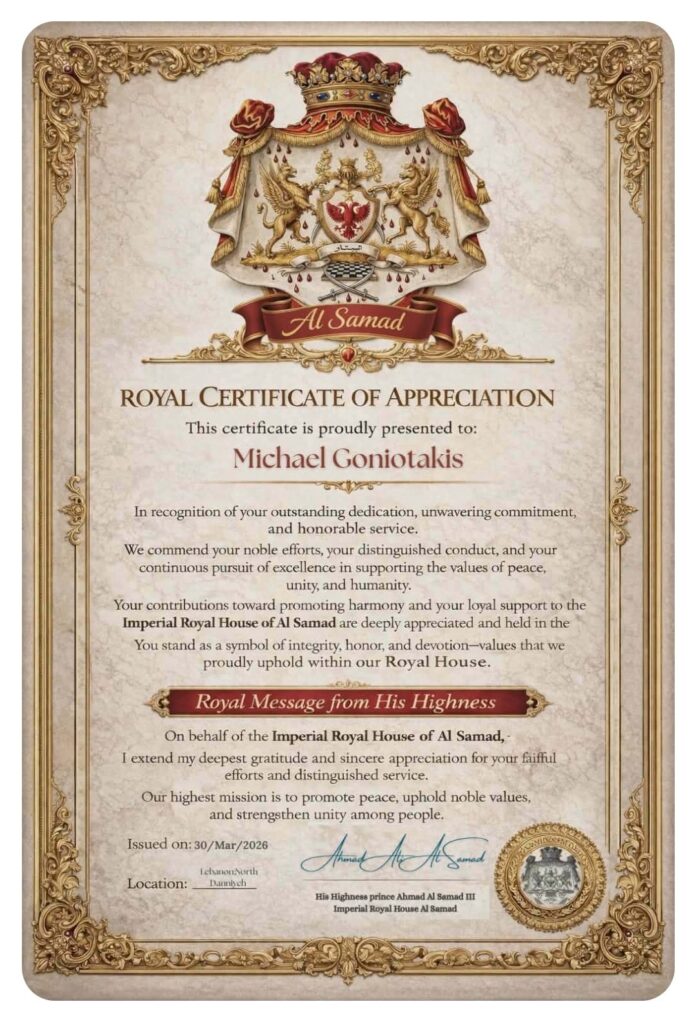















Επιμέλεια: Eva Lianou Petropoulou
العنوان : (استخدام القوة للهيمنة , ستلقى فشلا بعد فترة).
بقلمي انا سمو الامير أحمد علي الصمد الثالث ، أمير ورئيس المنزل الملكي الصمد بالإسم والذراع.
إنّ ما نشهده اليوم حتى الساعة هذه ، هو ما سبق وما تحدثت عنه سابقا في المقالات السابقة ، في الشرق الأوسط ليس مجرد أزمات متفرقة ، بل هو تحوّل بنيوي عميق يعيد رسم ملامح المنطقة بأكملها. هذه التحولات تأتي ضمن سياق الانتقال التدريجي نحو ما يُعرف بـ”الشرق الأوسط الجديد” في دخول النظام العالمي الجديد ، حيث لم تعد الحدود السياسية وحدها هي العامل الحاسم ، بل تداخلت معها خرائط النفوذ ، والطاقة ، والتحالفات الدولية . والوقت هو العنصر الاهم للجميع فكلما طالت ارتفعت التكلفة والخسائر ، وزادت الارباح لاصحاب مصانع السلاح وهي اصحاب المكسب والمتحكم .
فاذا المنطقة تدخل مرحلة إعادة توزيع للقوة ، تتراجع فيها أنظمة تقليدية ، وتبرز قوى جديدة ، فيما تتحول بعض الدول إلى ساحات نفوذ غير مباشر بين القوى الكبرى وهنا نرى ان تركيا تدخل على الخط لحماية مصالحها ولدراسة الشريك القوي الذي سيسيطر في المستقبل لاعلان التحالف معها وكذلك ايضا نرى التغييرات المتعلقة ب إيران كعامل أساسي بالإيضافة الى أذرعها القائمة في لبنان واليمن والعراق وحتى في بعض الدول الأجنبية حيث هذه تلعب أيضا بورقة ضغط كبيرة بالإيضافة نرى الرأي العام في العالم بدأ يتغير .
فإذا إن هذا المشهد لا يحدث بشكل عشوائي ، بل هو نتيجة تراكمات طويلة من الصراعات ، والتدخلات الدولية، والانقسامات الداخلية ، التي يتم اليوم إعادة توجيهها ضمن نظام عالمي يتشكل بهدوء ولكن بثبات. ومن الاحداث عما نشهده ونقوله ، فيما يتعلق بعدم التوافق بين إيران وأمريكا ، فالأمر يتجاوز مجرد خلاف سياسي أو تفاوضي بل هو اعادة صياغة وتموضع لكتابة الهيمنة والنفوذ في الشرق الاوسط . هو صراع بنيوي قائم على تضاد في الرؤية والاستراتيجية:
الولايات المتحدة تسعى إلى نظام إقليمي قائم على الاستقرار المرتبط بمصالحها بما يخدم اهدافها ، وضمان تدفق الطاقة، وحماية حلفائها.
في المقابل ، ترى إيران نفسها قوة إقليمية مستقلة ، تسعى لفرض توازن ردع ، وتوسيع نفوذها الإقليمي عبر أدوات متعددة ، سياسية وعسكرية وعقائدية وضمان استقرارها من خلال اغراضها النووية .
هذا التناقض الجوهري يجعل أي اتفاق بين الطرفين مؤقتًا أو تكتيكيًا في أفضل الأحوال ، أي أن تاريخه قصير الأجل ، وليس استراتيجيًا دائمًا. فكل طرف ينظر إلى الآخر ليس كشريك محتمل ، بل كمصدر تهديد يجب احتواؤه أو تقليص تأثيره وهذا ما نراه من مفاوضات كلها تصل الى طريق مسدود .
لذلك ، فإن ما نراه من مفاوضات أو تهدئات ليس نهاية للصراع ، بل إعادة تموضع ضمن صراع أطول وأعمق وأعنف والتأكيد أنه سيكون مجرد حجر. في رقعة الشطرنج . ومع استمرار هذا التوتر ، يبقى الشرق الأوسط ساحة رئيسية لإعادة تشكيل النظام الإقليمي ، تمهيدًا لمرحلة قد تكون أكثر وضوحًا في السنوات القادمة ، ولكن أيضًا أكثر حساسية .
وفي خضم هذه التحولات الخطيرة ، تتجه المنطقة نحو لحظة فاصلة ، حيث لم تعد الأحداث تسير بشكل تدريجي بطيء ، بل تتسارع نحو إعادة رسم المشهد بالكامل فالدبلوماسية تصل الى طرق مغلقة كما قلنا وقانون الغاب هو المسيطر … بشكل قد يبدو للبعض مفاجئًا ، ولكنه في الحقيقة نتيجة مسار طويل كان يتشكل منذ سنوات فمن يفهم التاريخ والسياسة يدرك ان الوقت للحظة الفصل ووقوع الحروب قد بدأ .
وفي خضم هذه التحولات ، لا بد من الإشارة إلى أن المرحلة القادمة لن تكون امتدادًا طبيعيًا لما سبق ، بل هي مرحلة انتقالية حساسة تحمل في طياتها احتمالات تصعيد حقيقي. فالمؤشرات السياسية والعسكرية والاقتصادية تدل على أن المنطقة تشهد حالة إعادة تمركز للقوى ، وتجهيزًا تدريجيًا لسيناريوهات أكبر من مجرد أزمات موضعية. فما شهدناه لم يكن إلا البداية او بما يسمى الإحماء .
هذا لا يعني بالضرورة أن المواجهة الشاملة أصبحت حتمية ، ولكن يعني بوضوح أن احتمالاتها باتت أقرب من أي وقت مضى ، خصوصًا مع تراكم ملفات مفتوحة دون حلول جذرية ، واستمرار سياسة شد الحبال بين القوى الكبرى والإقليمية.
من هنا ، تأتي أهمية الوعي ، فالشعوب في العالم بأسره لابد أن تستيقظ وتدرك أنها لم تعد بعيدة عن تأثير هذه التحولات ، بل أصبحت جزءًا مباشرًا منها ، سواء على المستوى الاقتصادي أو الأمني أو حتى الاجتماعي. المرحلة القادمة تتطلب قراءة دقيقة ووعي زائد وقدرة على التماس الحقائق وعدم الإنجرار نحو التعصبيات وغيرها ، وأيضا تجنب الانجرار خلف الروايات السطحية ، لأن ما يجري ليس حدثًا عابرًا ، بل إعادة تشكيل لمنطقة بأكملها بل ولعالم بأسره . حتى ان الامر سيأتي بعد ذلك على أوروبا ، فأنا أشدد على الوحدة والتمسك وعدم الانجرار لأي نزاع فما يحدث في الشرق هو بداية وستنتقل لأبعد من ذلك .
إن ما يقترب ليس فقط تصعيدًا مرحليًا ، بل قد يكون بداية لمرحلة يُعاد فيها رسم التوازنات بشكل واضح، تمهيدًا لبلورة نظام إقليمي جديد ضمن إطار النظام العالمي الجديد الذي يتشكل حاليًا.
والسؤال لم يعد كالتالي: هل سيتغير الشرق الأوسط؟
بل هو : كيف، ومتى، وعلى حساب من سيتم هذا التغيير؟

Using Force for Domination Will Inevitably Fail by His Highness Prince Ahmad Ali Al Samad III, Prince and Head of the Al Samad Royal House, by name and by hand.
What we are witnessing today, even now, is what I have previously discussed in earlier articles. The Middle East is not merely a series of isolated crises, but a profound structural transformation that is reshaping the entire region. These transformations are part of a gradual shift towards what is known as the “New Middle East” within the context of the new world order, where political borders are no longer the sole determining factor. They are now intertwined with maps of influence, energy resources, and international alliances. Time is the most crucial element for everyone; the longer it drags on, the higher the costs and losses, and the greater the profits for arms manufacturers, who are the ones who truly benefit and control the situation.
The region is entering a phase of power redistribution, where traditional systems are declining and new powers are emerging. Some countries are becoming arenas of indirect influence between major powers. Here, we see Turkey stepping into the fray to protect its interests and to assess which strong partner will dominate in the future, with the aim of forging an alliance. We also see changes related to Iran as a key factor, in addition to its existing proxies in Lebanon, Yemen, Iraq, and even some foreign countries, where it also wields significant leverage. Furthermore, we are witnessing a shift in global public opinion.
This scenario is not unfolding randomly, but rather is the result of a long accumulation of conflicts, international interventions, and internal divisions, all of which are now being redirected within a global system that is quietly but steadily taking shape. Regarding the events we are witnessing and discussing, particularly the disagreement between Iran and the United States, the matter transcends mere political or negotiating differences. It represents a reshaping and repositioning of the landscape of hegemony and influence in the Middle East. It is a structural conflict based on a fundamental clash of visions and strategies:
The United States seeks a regional order based on stability that serves its interests, ensuring the flow of energy and protecting its allies.
In contrast, Iran sees itself as an independent regional power, striving to impose a balance of deterrence, expand its regional influence through various political, military, and ideological means, and secure its stability through its nuclear program.
This inherent contradiction renders any agreement between the two sides temporary or tactical at best, meaning it has a short lifespan and is not strategically sustainable. Each side views the other not as a potential partner, but as a source of threat that must be contained or its influence diminished. This is what we see in negotiations that consistently reach a dead end.
Therefore, what we witness in terms of negotiations or de-escalations is not an end to the conflict, but rather a repositioning within a longer, deeper, and more violent struggle, confirming that each will be merely a pawn on the chessboard. As this tension persists, the Middle East remains a key arena for reshaping the regional order, paving the way for a phase that may become more pronounced, but also more sensitive, in the coming years. Amid these dangerous transformations, the region is heading towards a pivotal moment. Events are no longer unfolding gradually, but are accelerating towards a complete reshaping of the landscape. Diplomacy has reached dead ends, as we have mentioned, and the law of the jungle prevails—a situation that may seem surprising to some, but is in fact the culmination of a long process that has been developing for years. Anyone who understands history and politics realizes that the time for a decisive moment and the outbreak of war has begun.
In the midst of these transformations, it must be noted that the next phase will not be a natural extension of what has come before, but rather a sensitive transitional phase that carries within it the potential for real escalation. Political, military, and economic indicators suggest that the region is witnessing a realignment of forces and a gradual preparation for scenarios larger than mere localized crises. What we have witnessed is only the beginning, or what is called the warm-up.
This does not necessarily mean that a full-scale confrontation has become inevitable, but it clearly means that its likelihood is closer than ever, especially with the accumulation of unresolved issues and the continuation of the tug-of-war between major and regional powers. Hence the importance of awareness. People across the globe must awaken and realize that they are no longer immune to the impact of these transformations, but have become a direct part of them, whether on an economic, security, or even social level. The next phase demands careful analysis, heightened awareness, the ability to seek the truth, and the avoidance of prejudice and other biases. It also requires avoiding superficial narratives, because what is happening is not a passing event, but a reshaping of an entire region, indeed, the whole world. It will even affect Europe afterward. I emphasize unity, cohesion, and avoiding any conflict, because what is happening in the East is just the beginning, and it will extend far beyond.
What is approaching is not merely a phased escalation, but may be the beginning of a phase in which balances are clearly redrawn, paving the way for the formation of a new regional order within the framework of the new world order currently taking shape.
The question is no longer: Will the Middle East change?
Rather, it is: How, when, and at whose expense will this change occur?
S.A.R HRH Prince Ahmad Ali Al Samad
Imperial Royal House Al Ahmad Samad
#imperial_royal_house_al_samad #سمو_الأمير_أحمد_الصمد_الثالث #imperialroyalhousealsamad #nobility #AlQaim #royalhouse #المنزل_الملكي_الصمد_تاريخ_مكلل_بالمجد #princeahmadalialsamad #prince_ahmad_ali_al_samad #lebanon #article