













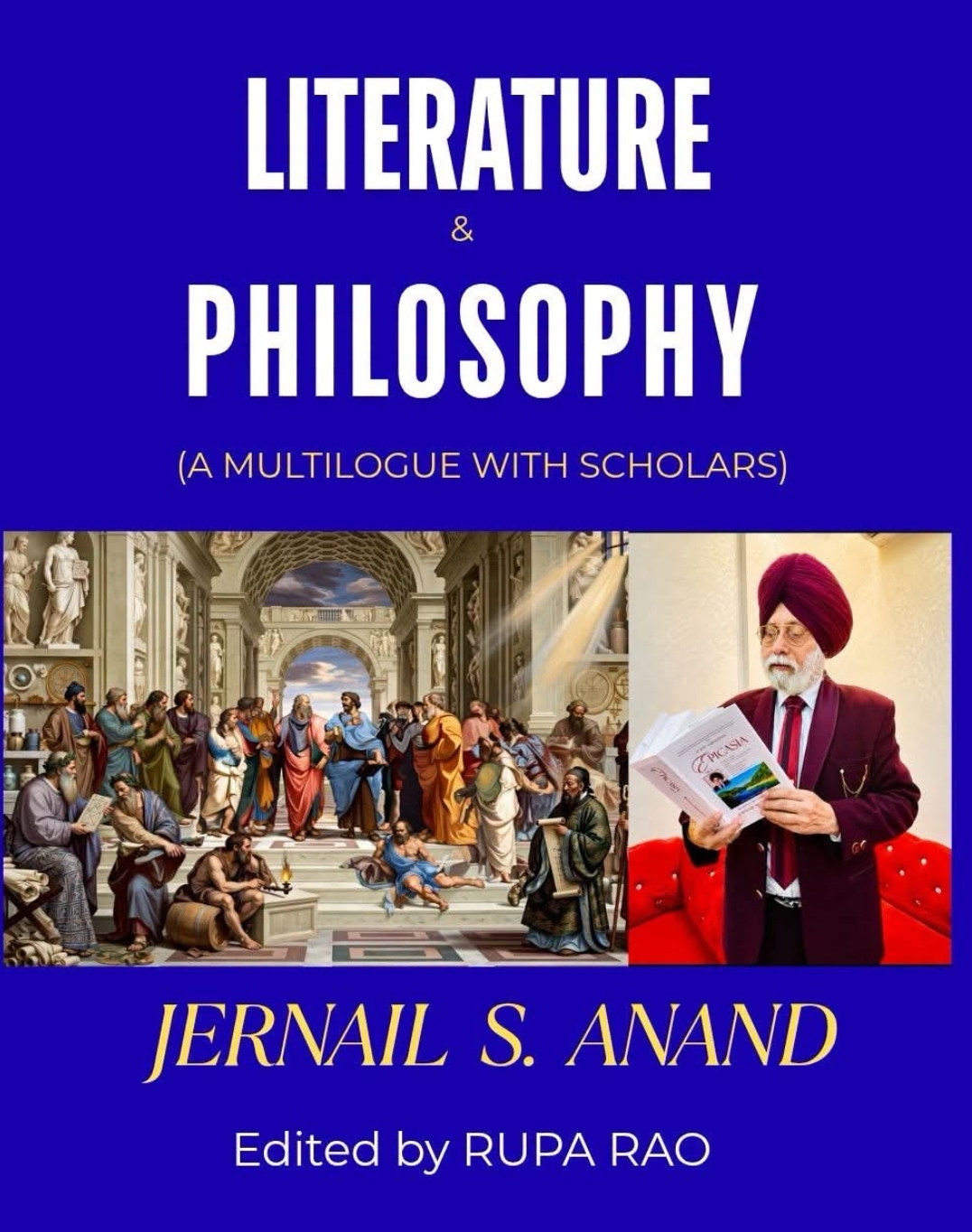
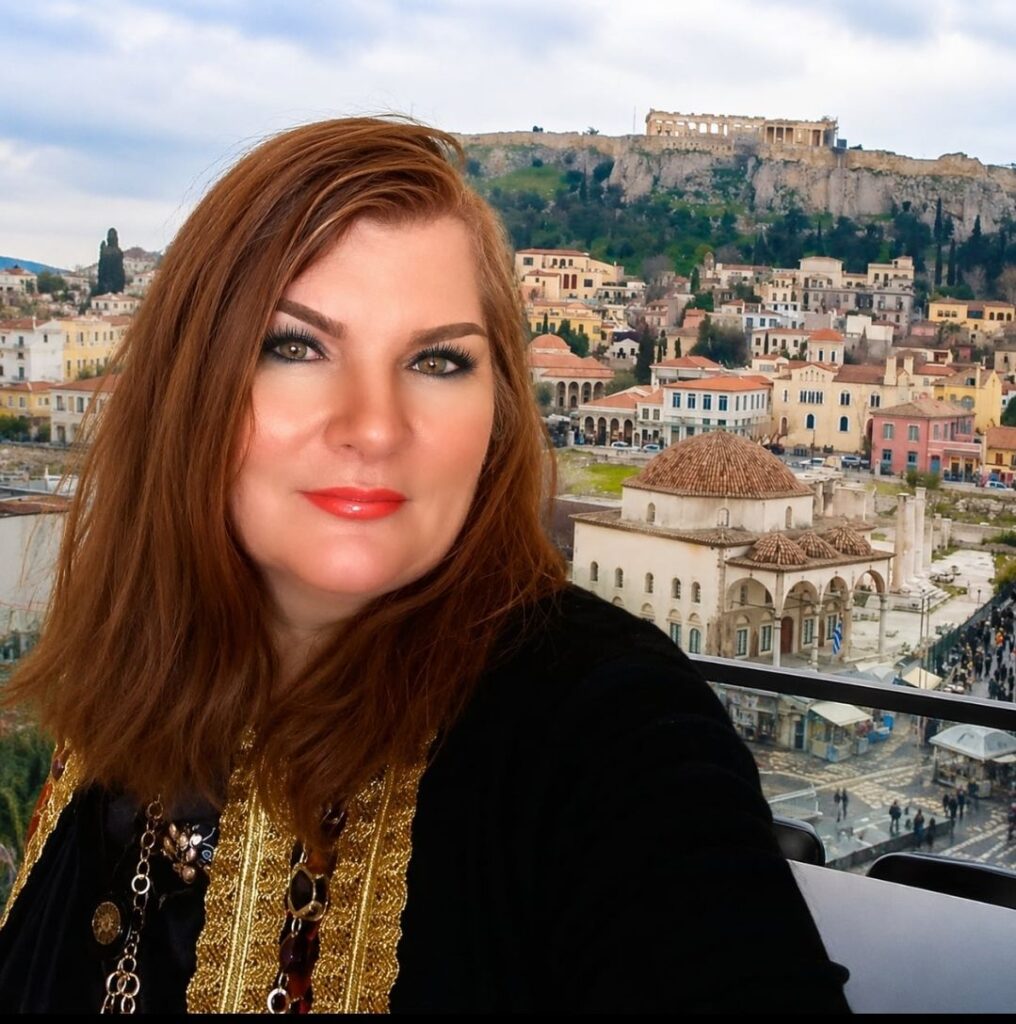
Preview By Milady Ren Milena Renzi
Επιμέλεια: Εύα Πετροπούλου Λιανού
Scholars who figure in this work: Mauro Montacchiesi, Dr Milena Renzi, Maja Milojković Eva Lianou Petropoulou, Võ Thị Như Mai Dr Sarita Sharma Dr Shalini Yadav Dr Annie John, Sailaja Mithra, Harinder Cheema and Rupa Rao.

WHEN WORDS BECOME CONSCIENCE AGAIN
Writing about this book means stepping once more into a dialogue that did not end with the final question addressed to Professor Jernail Singh Anand. Some answers do not remain confined to the page. They linger in the mind, enter our daily lives, and compel us to question what we have become.
I read Dr. Anand’s Multi‑Logue with Scholars on Literature and Philosophy not merely as a reader, but as one of those invited to participate in this exchange. My own voice appears within these pages, alongside the questions that have accompanied me for many years in my work as a writer and journalist: Can literature bring wounded peoples closer together? Can words transform personal suffering into a shared message of hope? What responsibility do women writers bear today? And how can we defend human dignity in a world that communicates incessantly, yet seems increasingly unable to listen?
These questions have grown out of the places I have travelled and the people I have encountered. India and the Middle East taught me that a culture cannot be understood from a distance. One must enter it with respect, listen to its silences, learn its wounds, and accept that what appears different may reveal something essential about ourselves. For this reason, I feel a profound connection with Anand’s definition of literature as “the diplomacy of words.”
There could hardly be a more necessary definition for our time. Wars are often preceded by the wrong words—manipulated, distorted, and used to divide. Yet peace, too, begins with words: a sentence that does not humiliate, a question asked without prejudice, a willingness to understand before judging. Literature can become precisely this free territory, a place where two human beings, despite distant histories and cultures, recognise the same fear, the same pain, and the same need to be loved and respected.
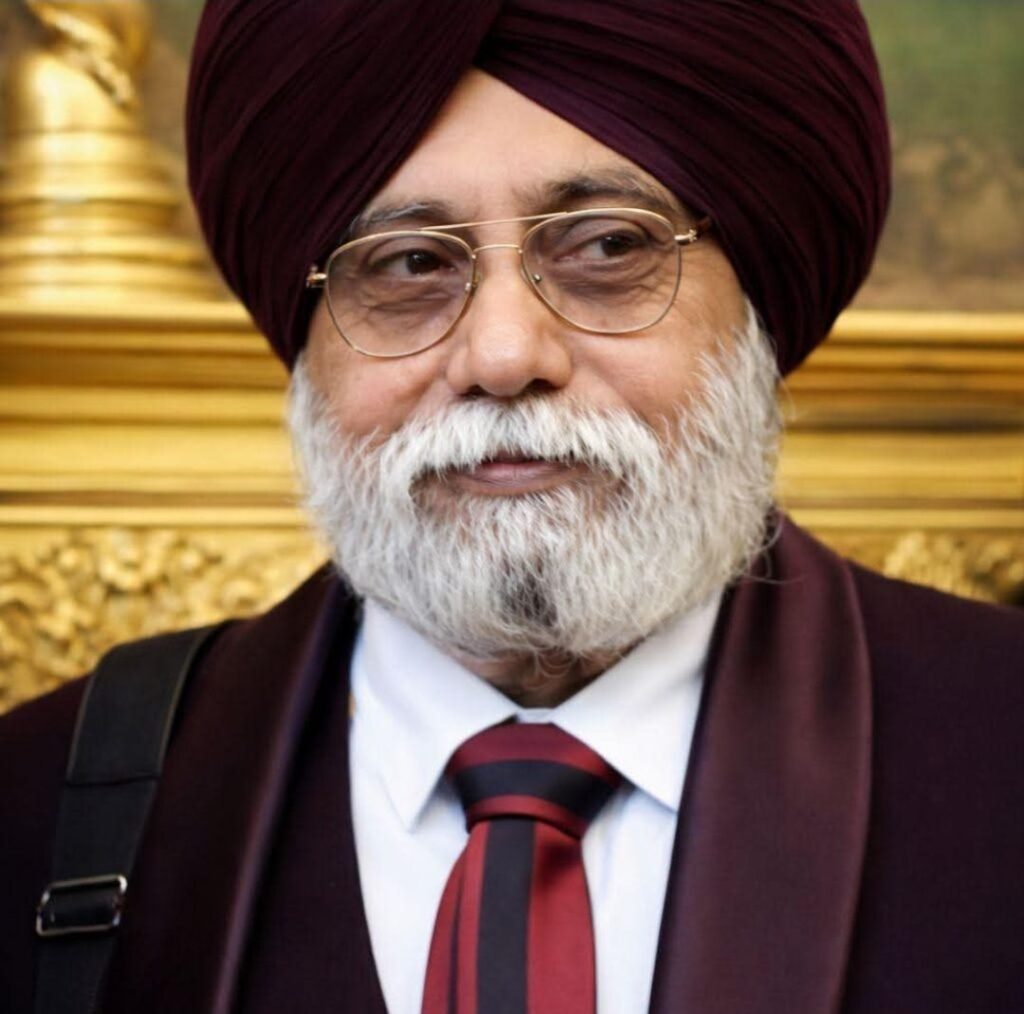
Edited by Rupa Rao, the volume gathers conversations with scholars, poets, and intellectuals from different countries. These interviews do not erect an immovable monument to Anand. Instead, they move through his thought, challenge it, test it, and reveal its many dimensions: the poet, the philosopher, the educator, the spiritual thinker, the defender of nature, and the deeply concerned witness to the crisis of our age.
What strikes me most is his refusal to surrender to indifference. Anand does not regard philosophy as an exercise reserved for universities, nor poetry as an ornament for the privileged few. His thought continually returns to the human being—to our choices and the consequences of our actions. We may possess immense knowledge, but when knowledge fails to teach respect for life, it risks becoming destructive. We may create extraordinary machines, but no machine can replace conscience.
The question of artificial intelligence runs through the book with particular urgency. Anand does not condemn progress; he fears the human being who refuses responsibility for it. In his vision, technology resembles a very fast car: it can carry us far, but without brakes it can destroy us. Those brakes are ethics, restraint, and the ability to distinguish between what is possible and what is right.
The same concern emerges in his reflections on education. Schools and universities produce skills, professionals, and specialists, but too often forget to form complete human beings. His proposal for an “Ethical Alphabet,” in which E stands for Ethics and K for Kindness, may seem simple, almost childlike. In reality, it contains the seed of a revolution: the need to teach young people that knowledge is not merely an instrument for personal success, but a responsibility toward others.
Within these pages, kindness is not weakness. It is courage. It requires self‑control, awareness, and the strength not to respond to violence with further violence. Likewise, literature is not an escape from the world, but a different way of inhabiting it. Writers take their own pain and transform it into something in which others may recognise themselves. They do not strike back at those who wounded them; they return to the world a story, a poem, or an image capable of changing the reader’s gaze.
Anand maintains that when we encounter a work of art and remain exactly as we were before, that work has not fulfilled its purpose. I share this belief. To write is to leave a trace—however small—within another person’s conscience. It is to open a window where previously there was only a wall.
Not every statement in this volume demands immediate agreement. Some provoke; others invite debate. Yet this is precisely the book’s strength. It does not lull the reader into comfortable consent; it compels us to think. And today, in an age dominated by instant judgements, slogans, and truths consumed within seconds, the act of stopping to think is already a form of resistance.
When I reached the end, I did not feel that I had simply finished reading a book. I felt I had been entrusted with a question: What will we do with the words placed in our hands?
We may use them to wound or to heal, to separate or to bring closer, to feed fear or to restore hope. Anand reminds us that literature still possesses this power. It can awaken conscience, defend memory, and lead humanity back toward its own humanity.
Dr. Anand’s Multi‑Logue with Scholars on Literature and Philosophy is therefore far more than a collection of interviews. It is an invitation to begin again from the foundations: right thought, right speech, and right conduct. Above all, it is an invitation to begin with kindness—a force that does not change the world through the noise of weapons, but through the quiet strength of one conscience opening itself to another.
Dott.ssa H.C. Milena Renzi
Italy